

How to Choose the Perfect Fishing Tackle for Lake Erie
A practical guide to selecting terminal tackle, lures, floats, and storage solutions for Lake Erie shore and small-boat anglers targeting walleye, bass, and perch.
Affiliate disclosure: Lake Erie Tackle Box may earn a commission when you buy through qualifying links on this page.
Lake Erie offers some of the most exciting freshwater fishing in North America, but its changing conditions demand smart gear choices. Whether you are casting from rocky shorelines or navigating shallow bays from a small boat, having the right tackle makes all the difference. This article breaks down exactly what to pack for different seasons and target species. We cover essential terminal tackle, effective lure types, reliable floats and bobbers, how water clarity shifts throughout the year, and safe storage methods that keep your kit organized and ready. By focusing on practical selection criteria rather than hype, you can build a versatile setup that handles everything from spring walleye runs to summer bass action without overpacking or leaving critical items behind. Anglers who understand these basics will spend less time troubleshooting and more time enjoying the water.
Table of Contents
Our Top Picks
Affiliate disclosure: if you buy through these links, we may earn a commission at no extra cost to you.

Bottom Line First
To choose the perfect fishing tackle for Lake Erie, match your gear to the target species and season. For spring walleye, use medium-light rods with small jigs and live bait rigs. Summer bass fishing benefits from topwater lures and soft plastics near structure. Always carry a variety of hooks, sinkers, and swivels to adapt to shifting conditions. Water clarity changes frequently, so keep both bright and natural-colored lures in your box. Store everything in a waterproof tackle box with dividers to prevent tangles and protect your investment.
Product Reviews
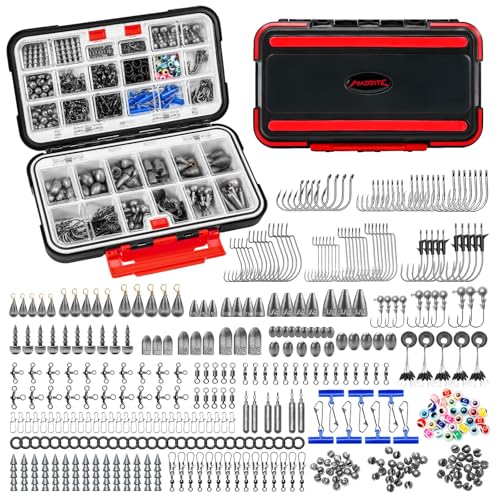
MadBite by KastKing 400-Pieces Freshwater Terminal Tackle Kit, Endorsed by Fishing Expert, Build 19+ Rigs, Fishing Hooks Accessory Kit, Fishing Gear, Weights&Sinkers, Jig Hooks, Floats and Bobber
Best for: Essential terminal tackle for building custom rigs
This kit provides a comprehensive assortment of hooks, weights, jigs, and floats that cover the majority of Lake Erie fishing scenarios. The included jig heads range in size to handle different depths and currents, while the variety of hooks allows you to switch between live bait and soft plastics quickly. Having sinkers and swivles pre-selected saves time on the water and ensures you have compatible components for your rod setup. The kit's organization helps anglers locate specific items without rummaging through loose parts. It serves as a reliable foundation for creating versatile rigs that adapt to changing conditions, making it an excellent choice for both shore and boat anglers who want to minimize guesswork when packing their tackle box.
Watch out: Verify hook sizes match your target species before heading out, as some may require larger or smaller gauges.
View on Amazon
PLUSINNO Fishing Lures, 137Pcs Tackle Box with Tackle Included, Crankbaits, Spoon, Hooks, Weights & Other Accessories, Fishing Bait Lure Gear Kit Gift for Men Bass Freshwater
Best for: All-in-one lure collection for multiple species
This tackle box delivers a wide array of crankbaits, spoons, and soft plastics designed to mimic the baitfish found in Lake Erie. The variety of colors and sizes allows you to experiment with different presentations without carrying multiple boxes. Crankbaits are effective for covering water and locating active fish, while spoons create flash and vibration that attract walleye and bass. Soft plastics can be rigged Texas-style or on jig heads for finesse techniques near structure. The included tackle box keeps everything organized and protected during transport. This kit reduces the need to purchase individual lures separately, offering a cost-effective way to build a diverse lure collection tailored to seasonal patterns.
Watch out: Some soft plastics may require additional hooks or weights not included in the box for optimal rigging.
View on Amazon
CWSDXM Fishing Floats and Bobbers Set, EVA Foam Pompano Floats, Spinner Bobber, Glow in The Dark & Stacked Floating Beads for Spearfishing, Catfish, Walleye (110pcs Fishing Floats kit)
Best for: Depth adjustment and visibility in varying conditions
This set of floats and bobbers provides anglers with reliable tools for controlling bait depth and enhancing visibility. The EVA foam construction ensures durability and consistent buoyancy, even after prolonged exposure to water. Spinner bobbers add movement and flash that can trigger strikes from wary fish in clear conditions or low light. Glow-in-the-dark options are useful for early morning or evening fishing when light levels drop. Stacked floating beads help protect knots and add extra visual cues for bite detection. Having a mix of sizes allows you to adjust quickly as fish move up or down the water column. This kit is particularly valuable for shore anglers who need to cast heavier rigs while maintaining precise depth control.
Watch out: Ensure float size matches your rod power to avoid casting difficulties or reduced sensitivity.
View on AmazonBuying Guide
Selecting Terminal Tackle for Lake Erie Structure
Lake Erie's shoreline features a mix of rock, sand, and weed beds, requiring adaptable terminal tackle. Start with a selection of jig heads ranging from 1/16 to 3/8 ounce to match different depths and currents. Include both straight-shank and offset worm hooks for soft plastics, as well as circle hooks for live bait presentations. Swivels are essential to prevent line twist when using spinning lures or fishing near current breaks. Keep a variety of split shot weights on hand to fine-tune your rig without changing the entire setup. This approach ensures you can quickly adjust to whatever structure the fish are holding in during any given trip.
Choosing Lures Based on Seasonal Water Clarity
Water clarity in Lake Erie shifts dramatically between spring runoff and late summer. During clear water periods, opt for natural-colored lures like shad, green pumpkin, or translucent plastics that blend with the environment. When the water turns stained or muddy after storms, switch to high-visibility options such as chartreuse, orange, or black-and-blue patterns that create contrast in low-light conditions. Spoon lures work well in both scenarios when retrieved at varying speeds. Always carry a mix of crankbaits and soft plastics to target different feeding behaviors as water temperatures change throughout the season.
Picking Floats and Bobbers for Depth Control
Floats and bobbers are critical for keeping bait at the right depth, especially when targeting walleye or perch in deeper channels. Choose EVA foam floats for their durability and buoyancy, which resist water absorption over time. Spinner bobbers add flash and vibration to attract fish in low-light conditions or murky water. Stacked floating beads can help protect knots and add extra visibility. Ensure your float size matches your rod power and target species; larger floats work better in windy conditions or when casting heavier rigs. Having a variety of sizes allows you to adjust quickly as fish move up or down the water column.
Organizing Tackle for Safe Storage and Longevity
Proper storage extends the life of your gear and keeps it ready for immediate use. Invest in a hard-shell tackle box with adjustable dividers to separate hooks, lures, and weights. Use small plastic bags or ziplock containers for loose items like sinkers and swivels to prevent loss. Keep sharp tools like pliers and hook removers in dedicated slots to avoid damage. Avoid storing your tackle box in direct sunlight or extreme temperatures, which can degrade plastics and weaken line over time. Regularly inspect hooks for rust and replace worn lures to maintain performance on the water.
FAQ
What is the best terminal tackle for Lake Erie walleye?
For walleye, medium-light rods paired with 1/16 to 3/8 ounce jig heads are highly effective. Use live bait rigs with circle hooks or small soft plastics like grubs and miniswimmers. Keep a variety of weights on hand to adjust for different depths and currents. Natural-colored jigs work well in clear water, while brighter options help in stained conditions. Always carry extra hooks and swivels to adapt to changing structure and fish behavior throughout the season.
How does water clarity affect lure selection?
Water clarity dictates whether you should use natural or high-visibility lures. In clear water, opt for shad, green pumpkin, or translucent colors that blend with the environment. When water turns stained or muddy after storms, switch to chartreuse, orange, or black-and-blue patterns that create contrast. Spoons and crankbaits work well in both scenarios when retrieved at varying speeds. Adjusting your lure color based on clarity helps match local baitfish and improves strike rates without changing your entire tackle box.
What size floats should I use for shore fishing?
For shore fishing, choose floats that match your rod power and casting distance. Medium to large EVA foam floats work well for heavier rigs and windy conditions. Smaller floats are better for finesse techniques or calm days. Ensure the float's buoyancy supports your bait weight without sinking. Spinner bobbers add visibility and vibration, making them useful in low light. Having a variety of sizes allows you to adjust quickly as fish move up or down the water column near the shore.
How should I store my fishing tackle to prevent damage?
Store tackle in a hard-shell box with adjustable dividers to separate hooks, lures, and weights. Use small bags for loose items like sinkers and swivels to prevent loss. Keep sharp tools in dedicated slots to avoid damage. Avoid storing your box in direct sunlight or extreme temperatures, which can degrade plastics and weaken line over time. Regularly inspect hooks for rust and replace worn lures to maintain performance. Proper organization extends gear life and keeps your kit ready for immediate use.
Bottom Line
Choosing the right fishing tackle for Lake Erie comes down to understanding the water, the target species, and the season. By selecting adaptable terminal tackle, matching lures to water clarity, using reliable floats for depth control, and organizing your gear safely, you can build a setup that handles any condition. Focus on practical selection criteria rather than overcomplicating your box. With the right foundation, you will spend less time troubleshooting and more time enjoying the water. Pack smart, stay prepared, and let your tackle work for you.
Frequently Asked Questions
What is the best rod and reel combination for Lake Erie walleye fishing?
For Lake Erie walleye, a medium-power spinning rod (6-7 feet) paired with a smooth spinning reel rated for 8-12 lb test line is ideal, as it provides the sensitivity needed to detect bites in deep water while handling the lake's unpredictable conditions. Look for reels with excellent drag systems that can withstand cold water temperatures and sudden wind-driven changes in water conditions.
How do I choose the right fishing line for cold water Lake Erie conditions?
For Lake Erie's cold water, fluorocarbon line is superior to monofilament because it remains flexible in sub-40-degree temperatures and is less visible to fish, while monofilament can become brittle and lose strength. Pair your main line with a leader system appropriate for your target species—typically 2-4 lb test fluorocarbon leaders for walleye and perch.
What tackle do I need for ice fishing on Lake Erie?
Ice fishing on Lake Erie requires a short, sensitive ice rod (24-36 inches) with a small reel and light line (2-4 lb test), along with specialized jigging lures and spoons designed for vertical fishing in deep water. You'll also need a quality life vest, ice auger, and safety equipment, as Lake Erie's ice conditions can be unpredictable and dangerous.
Is it worth investing in premium tackle for Lake Erie fishing?
Yes, premium tackle is worth the investment for Lake Erie because the lake's extreme conditions—sudden wind changes, deep thermoclines, and 9,910 square miles of variable water—demand reliable equipment that won't fail when conditions shift rapidly. Quality rods, reels, and line directly impact your ability to detect bites, set hooks, and land fish in challenging freshwater environments.
How do I choose between spinning and baitcasting reels for Lake Erie bass and perch?
Use spinning reels for lighter presentations and finesse techniques targeting perch, as they're easier to cast and handle light line, while baitcasting reels excel for heavier lures and bass fishing where precision and power are needed. Consider Lake Erie's wind conditions—spinning reels are more forgiving in gusty situations, making them the safer choice for most anglers unfamiliar with the lake.
What should I know about leaders and rigging for Lake Erie's shifting thermoclines?
Lake Erie's daily thermocline shifts require adjustable rigging that allows you to fish different depths quickly; use leader systems with swivels to prevent line twist when trolling, and adjust your leader length based on where fish are positioned in the water column. Fluorocarbon leaders also help you fish clearer water above and below thermoclines without spooking fish.
How do I select the right life vest and safety gear for Lake Erie fishing?
Choose a Coast Guard-approved Type III or Type V life vest designed for fishing that doesn't restrict movement, and ensure it's rated for Lake Erie's cold water rescue scenarios. Pair your life vest with other essential safety gear including a whistle, knife, and throwable flotation device, as Lake Erie's size and unpredictable conditions make safety equipment non-negotiable.


