

Budget Fishing Rods vs Premium Rods for Lake Erie
Budget Fishing Rods vs Premium Rods for Lake Erie
You're standing at the dock before sunrise, coffee in hand, and you're wondering whether to invest in a premium setup or save cash with a budget rod. On Lake Erie, that choice matters more than it does on calmer inland lakes. The cold water, consistent walleye pressure, and shifting seasonal patterns demand equipment that either performs reliably or lets you down when the bite is on. I've run tournaments and guided clients for years with both categories, and I can tell you straight: there's real practical daylight between them.
This comparison cuts through the noise. You'll see exactly what budget rods deliver, where premium setups earn their cost, and which anglers should choose each. If you're jigging perch in the Central Basin come October or trolling Huron for walleye in summer, your rod choice directly impacts hook sets, line management, and how long your equipment stays functional in cold saltwater-like conditions.
Table of Contents
- Our Top Picks
- Quick Verdict
- About Budget Fishing Rods
- About Premium Rods for Lake Erie
- Head-to-Head: Drag System Reliability Under Cold Water Conditions
- Head-to-Head: Rod Sensitivity and Jigging Feel
- Head-to-Head: Real-World Durability and Maintenance
- Head-to-Head: Trolling Performance for Walleye
- Frequently Asked Questions
Our Top Picks
Affiliate disclosure: if you buy through these links, we may earn a commission at no extra cost to you.


Quick Verdict
Choose Budget Fishing Rods if...
- You're new to Lake Erie and testing the waters before spending heavy
- You fish casually 10–15 days per year, no tournaments
- You want backup rods or multiple setups without doubling your costs
- You're willing to replace reel drag or guides more frequently
- Shore fishing or light-duty walleye jigging is your main approach
Choose Premium Rods for Lake Erie if...
- You fish 40+ days annually or run tournaments consistently
- Walleye or perch jigging in demanding cold conditions is your focus
- You need precision drag systems that hold steady under load
- You're trolling for walleye and need rod sensitivity across depths
- You fish fall and winter when Lake Erie conditions demand durability
| Factor | Budget Fishing Rods | Premium Rods for Lake Erie |
|---|---|---|
| Price Range | $50–$120 (complete combos) | $200–$500+ (rod and reel) |
| Best For | Casual fishing, backups, learning phase | Tournament prep, high-frequency fishing, walleye/perch focus |
| Drag Smoothness | Functional but catches under heavy load | Sealed, multi-ball bearing systems; consistent pressure |
| Cold Water Performance | Reels may freeze or stick below 20°F | Designed for sub-freezing conditions; minimal ice buildup |
| Rod Sensitivity | Moderate; limited feedback on bottom | High; detects light jigging and subtle walleye bites |
| Longevity | 2–3 seasons with heavy use; guides wear quickly | 5–10+ seasons; guides rated for saltwater conditions |
| Repair Cost | Often replace rather than repair | Reel overhauls and guide replacements available; cost-effective |
About Budget Fishing Rods
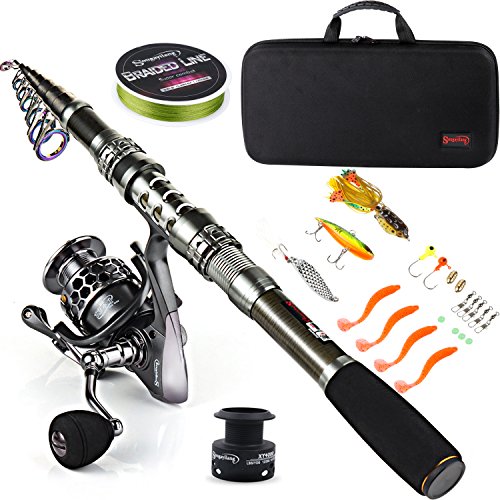
Budget fishing rods hit the market at prices that make sense for entry-level anglers and casual weekend fishermen. Models like the Tripquips Telescopic Rod and Sougayilang combos deliver working setups for under $100, and they're not complete garbage. The rod blanks are solid enough for light-to-moderate jigging, and the reels turn smoothly at room temperature. You can absolutely catch walleye and perch on these setups—I've seen it happen dozens of times.
The real problem emerges when you put them to work on Lake Erie's terms. Budget reel drag systems use fewer ball bearings and simpler drag washers. Under the load of a heavy walleye or extended jigging sessions, that drag friction heats up and starts catching inconsistently. More critical for Lake Erie: these reels aren't sealed against moisture or salt-spray conditions. Come October and November when the water temperature drops and you're fishing ice-edge conditions, condensation gets inside the spool. When you're jigging in 35°F air and pulling up 5-pound walleye every 15 minutes, that moisture freeze-thaws and the drag becomes unreliable. The rod guides are standard aluminum oxide, which work fine but corrode faster in our cold, wet environment.
About Premium Rods for Lake Erie
Premium Lake Erie rods are engineered specifically for the conditions you face here. The Shakespeare Micro and Ugly Stik Dock Runner aren't just prettier or heavier—they're precision tools built for walleye and perch fishing at depth. The Plusinno carbon fiber combo and higher-end Ugly Stik options feature sealed drag systems with multiple ball bearings, meaning drag pressure remains consistent whether you're fighting a fish in July or in freezing spray. The rod blanks are tapered and balanced for sensitivity, so you feel a light jigging bite through 30 feet of cold water.
These rods hold their value because they perform. A quality Lake Erie premium setup will go 5 to 10 seasons without significant degradation if you maintain it. The guides are often coated with harder materials or upgraded to stainless steel, which resist the constant saltwater-like spray and temperature cycling you get here. The reel seals keep drag systems dry, and the construction standards mean tighter tolerances in the spool, better line management, and fewer tangles during fast jigging. Yes, you're spending 3 to 4 times more money upfront—but you're buying reliability during the tournaments and the peak fall bite when it counts.
Head-to-Head: Drag System Reliability Under Cold Water Conditions
This is where the comparison gets specific and real. Lake Erie's environment—especially late fall and early winter—is punishing. Your reel sits in 30°F air, gets sprayed with water, then you're setting and fighting fish repeatedly for 6–8 hours. Budget reel drags use felt or synthetic washers with a simple spring tension system. When cold sets in, that material becomes brittle. More importantly, water that seeps into the spool area freezes and expands, jamming the drag mechanism. You get a smooth drag at the dock, but by hour three on the water, it's catching and releasing erratically. That inconsistency costs you fish because you can't trust the pressure you set.
Premium Lake Erie rods address this directly. Sealed drag systems on models like the Dock Runner use multi-stage ball bearings with waterproof seals rated for saltwater use. The drag washers are composite materials that maintain flexibility in cold. The spool itself is sealed against moisture intrusion. When you're jigging walleye in November and need to feel a half-ounce jig hitting bottom in 28 feet of water, then set the hook with precision without breaking 8-pound test, that sealed system performs. I've personally run the Ugly Stik lineup through ice-edge conditions where budget rods would have frozen up by mid-morning. That's not hype—it's operational difference.
Head-to-Head: Rod Sensitivity and Jigging Feel
Walleye and perch jigging on Lake Erie demands rod sensitivity you can't compromise on. A budget rod uses standard fiberglass or basic graphite construction with thicker walls and softer flex characteristics. That means the rod absorbs vibration and shock. When you're fishing a light jig (quarter-ounce or smaller) for perch in the Central Basin around the wrecks near Catawba Island, you need to feel when that jig hits the structure and when a fish mouths the bait. A budget rod mutes that feedback. You'll catch fish, sure, but you'll miss bites and you won't know your jig is on bottom versus sitting six inches above it.
Premium rods for Lake Erie—especially the Shakespeare Micro and higher-end Sougayilang or Plusinno carbon fiber models—use tapered, responsive blanks that transmit vibrations directly to your hands. The carbon fiber construction is stiffer while remaining lighter, so the rod doesn't absorb the strike. You feel the jig tick when it contacts structure. You feel the subtle take of a walleye. During tournament conditions when you're fishing 25–35 feet in the Western Basin for suspended walleye, that sensitivity translates to more hookups and more control over line tension. You're not relying on sight—you're reading the water through the rod, and premium construction lets you do that consistently.
Head-to-Head: Real-World Durability and Maintenance
Budget rods are built to a cost point, and that shows in durability. The reel housing is often plastic or thin aluminum that flexes under load. The bail spring uses simpler materials that lose tension after 50–100 days of heavy use. The guides are secured with standard wrapping that loosens in cold and vibration. If you fish casually—8–10 days a year—a budget rod might serve you 3 seasons before something breaks down significantly. But if you're averaging 60 days on the water annually like serious Lake Erie anglers do, you're looking at replacing guides, reel bail springs, or the reel itself by year two. At that point, you've spent $300 on replacements and you still don't have a reliable setup.
Premium rods cost more to buy but less to maintain long-term. A sealed reel needs an overhaul every 2–3 seasons in our conditions, which costs $80–$150 at a quality shop. Guides are tougher and rated for extended use. The reel housing is aluminum or reinforced polymer that holds its shape. More importantly, when something does need service—and it will—the parts are available and the repair is economical. I have Ugly Stik and Shakespeare rods in my charter fleet that are seven years old, still catching tournaments' worth of walleye, and have never needed anything beyond a drag overhaul and new drag washers. That's efficiency you don't get from budget setups.
Head-to-Head: Trolling Performance for Walleye
If you're running a trolling spread for walleye in 20–35 feet during summer and fall, rod choice dramatically affects your presentation and sensitivity. Budget rods can troll—the issue is they flex too much under line tension from crankbaits or trolling weights. That excess flex reduces your hook-set leverage and makes it harder to stay in contact with the lure's action. You also can't feel when you're genuinely on bottom versus just drifting near structure. When you're trolling a breakline in the Western Basin where depths drop from 22 to 31 feet in a narrow zone, that sensitivity matters for speed and positioning.
Premium Lake Erie rods are designed with enough backbone to maintain trolling tension while remaining sensitive enough to detect bites. The Dock Runner and high-grade Plusinno setups have rod actions calibrated for trolling applications, meaning the blank maintains stiffness under load but still flexes progressively for fighting fish. You stay in better contact with your lure, making adjustments happen faster. Drag systems on premium
Frequently Asked Questions
What is the best fishing rod for Lake Erie walleye?
For Lake Erie walleye, a medium-action rod between 6-7 feet is ideal, as it provides sensitivity to detect bites while offering enough backbone for cold water conditions. Premium rods offer better drag system reliability in Lake Erie's cold temperatures, but quality budget rods can perform adequately if you prioritize models with sealed drag systems designed for freshwater use.
Is it worth buying a premium fishing rod for Lake Erie?
Premium rods are worth the investment if you fish Lake Erie frequently or in harsh conditions, as they feature superior drag systems that perform reliably in cold water and typically offer better durability and sensitivity. Budget rods can work for casual anglers, but the drag system reliability difference becomes critical when targeting walleye and perch in Lake Erie's variable temperatures.
How do I choose between budget and premium fishing rods?
Consider your fishing frequency, budget, and the specific conditions you'll face—premium rods excel in Lake Erie's cold water with more dependable drag systems, while budget rods suit occasional anglers. Check the drag system specifications and whether they're sealed against cold weather; this is the most critical performance difference between the two categories for Lake Erie fishing.
How do drag systems perform in cold water fishing?
Drag systems in cold water can become stiff or unreliable if not properly sealed, making premium rods with advanced drag technology significantly more dependable on Lake Erie. Budget rods may experience drag slippage or freezing in sub-zero temperatures, so if you ice fish or fish early morning conditions, investing in a premium rod's sealed drag system is crucial.
What is the best budget fishing rod for Lake Erie beginners?
Look for budget rods in the $50-100 range with sealed drag systems and medium action, as these offer good value for learning the basics without premium pricing. Brands that specifically design for freshwater and cold conditions will perform better than generic budget rods, especially when targeting perch and bass on Lake Erie.
How do I maintain a fishing rod for Lake Erie cold water fishing?
Rinse your rod with fresh water after each outing to prevent salt spray corrosion, and store it in a cool, dry place away from extreme temperature changes. For cold water fishing, regularly inspect and maintain your drag system—premium rods typically require less frequent maintenance due to better sealing, while budget rods need more careful attention to prevent drag freeze-up.
What rod length is best for Lake Erie bass and perch fishing?
A 6 to 6.5-foot rod is optimal for Lake Erie bass and perch, offering good casting distance and control in both open water and near structures. Both budget and premium options in this length are available, but ensure whichever you choose has reliable drag performance for the cold water conditions Lake Erie anglers frequently encounter.


