

How To Choose The Right Walleye Trolling Spoons 2026
By Mike Caruso
You don’t win tournaments on Lake Erie by guessing what color works. You win them by matching your presentation to the water clarity, depth, and light penetration of that specific basin. Trolling spoons are the most versatile weapon in our arsenal because they offer action at any speed and sink to any depth. If you are still using the same spoon configuration from last spring, you are leaving fish on the table. The difference between a limit and an empty cooler often comes down to blade width, weight distribution, and how that metal reflects light in stained Western Basin water versus clear Central Basin depths.
Quick Answer
Choose wide-blade spoons like the Humpie or Mepps for stained Western Basin water to maximize visibility and vibration. Switch to narrower, slender blades like the Kastmaster or Rapala Jigging Rap for clear Central Basin depths where walleye are spooky. Always match your spoon weight to your trolling speed; heavier blades sink faster in cold spring water, while lighter options work better in late fall when fish hold deeper.
Table of Contents
Our Top Picks
Affiliate disclosure: if you buy through these links, we may earn a commission at no extra cost to you.


Blade Width and Water Clarity
The single biggest mistake I see on the water is using a narrow blade in stained water. When you are fishing the Western Basin near the Maumee River mouth or the sandusky flats, the water is often full of silt and algae. In these conditions, walleye rely heavily on their lateral lines to detect prey. A wide-blade spoon creates more turbulence and vibration per stroke than a narrow one. This extra thump cuts through the murk and alerts fish from hundreds of yards away.
Conversely, when you move into the Central Basin or the clear waters off South Bass Island, walleye become incredibly visual and easily spooked. A wide blade looks unnatural and aggressive in crystal-clear water. Here, you need a slender profile that mimics a dying shiner or alewife. Slender blades like the Kastmaster or Rapala Jigging Rap glide smoothly without creating excessive drag. They allow you to troll at slower speeds without the spoon wobbling violently, which keeps your bait looking more like live prey.
Weight Distribution and Depth Control
Trolling spoons are not created equal when it comes to diving. The weight distribution determines how fast your bait sinks and how deep it runs at a given speed. For spring trolling, where you are often chasing fish in 15 to 25 feet of water, you need a spoon that dives quickly. Look for spoons with a weighted nose or a heavy wire construction. These designs cut through the current and get down to the walleye’s level immediately.
In the fall, when walleye move into deeper basins, depth control becomes even more critical. You might be trolling in 40 feet of water at just two miles per hour. A lightweight spoon will float near the surface, doing you no good. You need a spoon with enough mass to sink against the upward force of your trolling speed. Test your setup by dropping it overboard and timing how long it takes to hit the bottom. This simple check saves hours of guessing on the water.
Also, consider the shape of the spoon’s body. Round-bodied spoons tend to dive deeper than flat blades at the same speed. If you are running downriggers or planers, a round-bodied spoon like the Rapala Jigging Rap will stay closer to your line path. This is crucial when fishing tight groups in heavy boat traffic areas.
Color Selection for Lake Erie Conditions
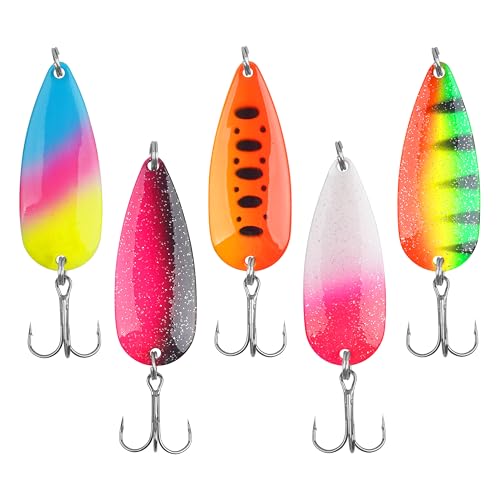
Color matters less than action and size, but it still plays a role in low-light conditions. In stained Western Basin water, go for high-visibility colors. Chartreuse, orange, and glow-in-the-dark patterns work well because they stand out against the green-brown backdrop. You want the spoon to flash brightly as it rotates, drawing the eye of a fish that can barely see your bait.
In clear Central Basin water, natural colors are king. Silver, gold, and white imitate the local forage base like alewives and shiners. When the sun is high and the water is clear, a bright orange spoon looks like an alien object to a walleye. Stick to translucent or metallic finishes that reflect the surrounding light. If the water is slightly stained, try a spoon with a natural body and a chrome or gold blade for added flash.
Spoon Rigging and Leader Setup
How you rig your spoon can make or break your success. For most trolling applications, I recommend using a 12 to 18-inch leader of fluorocarbon. Fluorocarbon is nearly invisible in water and abrasion-resistant against the walleye’s teeth. A monofilament leader will stretch too much, reducing hook-setting power, while a steel leader is unnecessary unless you are fishing for pike or musky.
When using multiple spoons on a single line, space them out evenly to prevent tangling. Use barrel swivels between each spoon to allow free rotation. This prevents the line from twisting as the spoon spins, which can weaken your tackle and reduce action. If you are running downriggers, attach the spoon directly to the cable with a snap swivel. This gives you precise depth control and allows you to drop the bait quickly when a fish is spotted.
Always check your hooks before every trip. Walleye have sharp teeth that can cut through light wire. If your hook point is dull or bent, replace it immediately. A sharp hook ensures a solid connection when a walleye strikes, especially when you are trolling at higher speeds.
Seasonal Adjustments: Spring vs. Fall
Spring and fall require different approaches because the fish behavior changes drastically. In spring, walleye are often shallow, feeding on baitfish near the shore. Use smaller spoons, around 3 to 4 inches in length, and troll at slower speeds of 1.5 to 2.0 mph. This keeps your bait in the strike zone longer and mimics the slow-moving forage fish.
In fall, walleye move deeper and become more aggressive. They are preparing for winter and will chase larger prey. Switch to larger spoons, 5 to 7 inches long, and increase your trolling speed to 2.0 to 2.5 mph. This covers more water and triggers reaction strikes from active fish. Also, consider using a weighted line or lead core to get your bait down to the thermocline where the fish are holding.
Frequently Asked Questions
What is the best spoon for stained Western Basin water?
Wide-blade spoons like the Humpie or Mepps Aglia are ideal because they create more vibration and visibility in murky conditions.
How deep do trolling spoons run at 2 mph?
Depth varies by design, but a standard 4-inch spoon will typically run 10 to 15 feet at 2 mph. Heavier or round-bodied spoons dive deeper.
Should I use a leader when trolling spoons?
Yes, use a 12-18 inch fluorocarbon leader to reduce visibility and resist tooth abrasion from walleye.
What size spoon is best for fall walleye?
Larger spoons, 5 to 7 inches long, are more effective in fall when walleye target larger baitfish and hold deeper.
Can I use spoons for ice fishing on Lake Erie?
Absolutely. Slender spoons like the Kastmaster work well under the ice. Jig them slowly to mimic a dying minnow, especially in clear water.
Choosing the right walleye trolling spoon is not about finding a magic bullet. It is about matching your gear to the specific conditions of Lake Erie that day. Pay attention to water clarity, depth, and season. Adjust your blade width, weight, and color accordingly. This methodical approach will consistently put more fish in your boat than any single product recommendation ever could.


