

Best Walleye Crankbaits For Lake Erie
🏆 Top Picks at a Glance
 #1
#1
Best Overall
Bill Lewis Fishing Lipless Lifelike Trolling Precise Walleye Crankbait with Two Large Mustad Triple Grips, Erie SHAD
$14.32
Check Price → #2
#2
Runner Up
Aorace 56pcs Fishing Lures Large Hard Bait Minnow VIB Lure with Treble Hook Life-Like Swimbait Fishing Bait Popper Crankbait Vibe Sinking Lure for Bass Trout Walleye Redfish
$34.99
Check Price →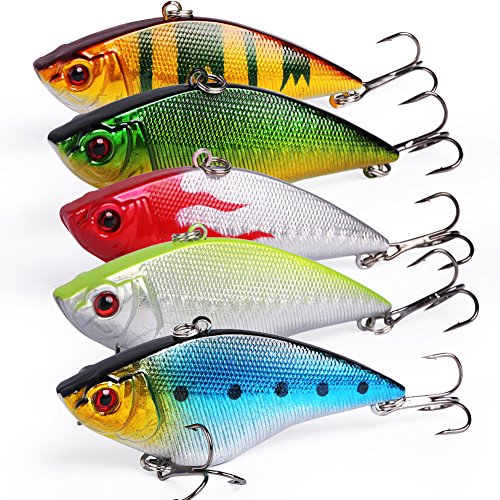 #3
#3
Best Value
Sougayilang Fishing Lures Large Hard Bait Minnow VIB Lure with Treble Hook Life-Like Swimbait Fishing Bait Popper Crankbait Vibe Sinking Lure for Bass Trout Walleye Redfish
$9.99
Check Price →Our Top Picks
Affiliate disclosure: if you buy through these links, we may earn a commission at no extra cost to you.
Factors to Consider
Dive depth and running depth
⚡ Quick Answer
Know the crank’s published running depth and test it at your trolling speed. Lake Erie fish hug different layers depending on basin and season, so have shallow, mid, and deep options ready. Deep-divers typically run 12–20 feet, mids 6–12, and shallow 3–6 feet. For precise control, pair the lure with a downrigger or snap weights when you need to pin the depth exactly.
Table of Contents
Action, wobble, and trolling speed
Cranks need a smooth wobble to trigger eye strikes. In Western Basin clear water, a subtle wobble and tighter pattern often outproduce loud rattles. In Central Basin stained water, a faster, aggressive wiggle and rattles can pull through baitfish and perch. Troll near 2.0–3.0 mph, adjusting to bite and boat traffic; slower when the thermocline is tight and the bite is finicky.
Color patterns and water clarity
Choose patterns that mimic local forage: shiners, emerald shad, and perch. In Western Basin clear water, natural silver/blue and greenback hues shine; in Central Basin stained water, brighter chartreuse, orange belly, and perch mixes work better. Fall dynamics tilt toward perch and shad patterns that align with the forage visible in the water column. Pick a small-to-mid-sized bait in your preferred pattern for best consistency.
Durability and hardware for cold water
Cold Erie water tests what the lure live-baits can’t. Look for stainless or heavy-duty split rings, reinforced lips, and robust body construction that resist chipping on rocky gaps and weed edges. Rinse after each trip to prevent mineral buildup and corrosion from the lake’s harsh cycles. A well-built crank that keeps its wobble after 20 casts earns you more bites in late season.
Seasonal and basin considerations
Fall patterns push you toward deeper edges and structure; you’ll see walleye stacked on breaks around 30–60 feet, especially near weed edges. In the Western Basin, search the 40–60 foot breaks and long-point edges; in the Central Basin, work humps and ledges in the 25–40 foot range. Have cranks that cover these ranges and be ready to switch quickly when the bite shifts on you.
Frequently Asked Questions
What running depth should I target with Lake Erie walleye crankbaits?
Have shallow (3–6 ft), medium (6–12 ft), and deep (12–20 ft) options ready. Western Basin structure often calls for mid to deep runs, while Central Basin edges may require deeper or longer-bill models. Test at your trolling speed to confirm the actual depth.
How should I choose color for clear vs. stained water in Western vs Central Basin?
In clear Western Basin water, natural shad and emerald shiner patterns excel. In the Central Basin’s stained water, brighter perch, chartreuse, and orange belly patterns tend to get more bites. Fall forage changes with water color, so adapt quickly.
What’s the best trolling speed for Lake Erie walleye crankbaits?
Around 2.0–3.0 mph is typical; slow down a touch in cold fronts when the fish bite best. If the bite is soft, try nudging toward 1.8–2.4 mph and watch the line for subtle ticks. Adjust for boat traffic and wind, but keep the lure in the strike zone steadily.
How important is lip size and action in fall and winter fishing?
Longer bills produce deeper runs, which matter on those 30–60 foot edges in fall. A tighter wobble can outproduce a loud, flashy wobble when the water is cold and clear. Match the pattern to the forage you’re seeing and the depth you’re fishing.
Do I need downriggers or weights with crankbaits?
Downriggers and weights help pin the lure at the exact depth you want, especially on deeper Western Basin structure. If you’re running a long line and can tolerate some depth drift, snap weights or planers work well. It’s about consistency and staying in the bite zone.
How do I maintain crankbaits for cold-water use?
Rinse after every trip to remove mineral buildup and debris. Dry thoroughly and store in a temperature-stable area to prevent plastic or paint cracking in the winter chill. Inspect hooks and split rings for wear before the next bass or perch run.
Which brands or models perform best on Lake Erie?
Erie guys run a mix: Rapala, Strike King, Smithwick, and Bomber all show solid field performance. Look for 5–7 inch mid-diver patterns in natural and perch colors, plus a few deeper-diving options for fall edges. Test several patterns to see what your local fleet is biting on in a given week.


