

How To Choose The Best Ice Fishing Rod And Reel Co
You want a rod that fits the bite you chase. For jumbo perch and tight-quarters panfish work, lean 18–24" light, fast-action rods — they put the hook in with minimal bait swing. For Lake Erie walleyes, especially when jigging in 20–40 feet, go 24–30" medium-light with a fast tip to load on the hookset without tearing the bait free. Tournament anglers favor the slightly longer rods for reach and leverage when boat-side counts matter.
Table of Contents
Our Top Picks
Affiliate disclosure: if you buy through these links, we may earn a commission at no extra cost to you.

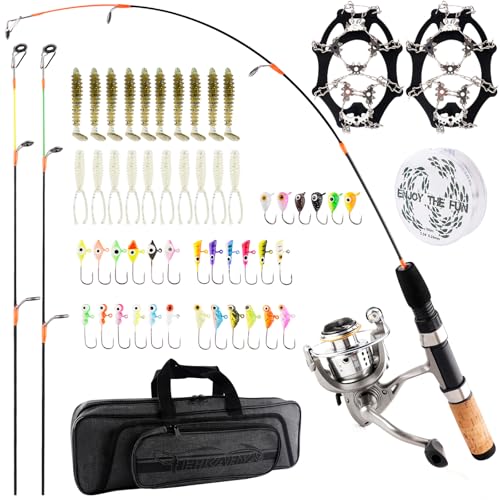

Factors to Consider
Rod length and action: match species and technique
Reel type, gear ratio, and drag: smooth and cold-proof
Small open-face spinning reels are the go-to on Erie ice; they give you line control and rapid recovery when a school erupts under the hole. Aim for a low-to-moderate gear ratio (4.1:1–5.2:1) with a silky, cold-rated drag so you can pump walleyes from structure without line slippage. Sealed bearings or corrosion-resistant finishes matter — Central and Western Basin slush will eat cheap reels quick if you don’t protect them.
Blank material and sensitivity: detect subtle Lake Erie bites
Graphite or composite blanks give the tip sensitivity you need to see sloppy winter slaps and short pecks from perch. Fast tips with a progressive butt let you control light fish and jury-rig heavier jigs when a walleye shows up. Look for guides and reel seats that resist icing; ceramic inserts and stainless hardware keep you fishing, not scraping line from frozen guides.
Line and leader choices: braid for feel, fluoro for presentations
Braid gives instant contact and small-diameter spooling — a huge advantage when you’re fishing 18–35 feet for suspended walleyes in the Western Basin. Use 2–4 lb braid for perch setups and 6–8 lb braid for walleye, always backed by a 24–36" fluoro leader when finesse matters. Fluorocarbon cuts glare and holds the jig tighter on a drop, which is what wins on slow, cold bites.
Practical setup and technique for Lake Erie ice
Choose jigs and weights to match depth: 1/16–1/8 oz tungsten for perch in 10–20 feet, 1/8–1/4 oz for walleyes in 20–40 feet, and up to 3/8 oz when you’re fishing current near points. Use electronics to target suspended schools — Western Basin fish often suspend in midwater while Central Basin fish relate to deeper humps or deadfall. If you’re running day-of tournament practice, carry two combos: a light perch rod for quick limits and a stouter walleye rod for the mixed-bag bites.
Frequently Asked Questions
What rod length is best for Lake Erie walleye through the ice?
For most Erie walleye work, a 24–30" rod hits the sweet spot — long enough for leverage, short enough for precise jigging through a hole. If you fish tight to structure or in tournament situations where speed matters, favor the shorter end of that range for quicker hooksets.
Should I use braid or mono on my ice reel?
Use braid for sensitivity and smaller diameter; it transmits subtle taps and cold slaps from down below immediately to your rod tip. Add a 2–3 foot fluorocarbon leader for invisibility and abrasion resistance around rock and boulder fields common on Erie flats.
Do I need a sealed reel for ice fishing on Lake Erie?
Sealed or corrosion-resistant reels aren’t mandatory, but they make your life easier; slush, salt spray, and repeated freeze-thaw will shorten an unprotected reel’s lifespan. If you’re fishing tournaments or heavy winter schedules in the Western Basin, choose a sealed drag and corrosion-proof finish.
What rod action and power should I pick for perch vs walleye?
Perch: light power, fast tip, 18–24" length to feel tiny headshakes and keep hooks set without tearing. Walleye: medium-light power, fast action, 24–30" length to drive hooks through tougher mouths while keeping finesse on the drop.
Which jig weights should I carry for Erie ice conditions?
Carry 1/16 and 1/8 oz tungsten jigs for perch in 10–25 feet, and 1/8–1/4 oz for walleyes in 20–40 feet; include a few 3/8 oz options for current lines and deeper drops. Match your plastics and livebaits to the jig size and adjust quickly when schools move or wind and current change the presentation.
How do I prevent my guides and line from freezing up?
Use guides with ceramic inserts and wipe lines frequently with a dry cloth; a light coat of silicone line dressing helps, too. Keep spare rods and reels in a warm compartment when you aren’t fishing, and swap them often if temps hover around freezing to prevent ice build-up.
Can one combo handle both jigging and dead-sticking on tournament day?
Yes, with the right compromise: a 26" medium-light fast rod and a smooth 5.1:1 spinning reel spooled with 6–8 lb braid covers both techniques adequately. You’ll sacrifice a little finesse versus a dedicated perch rod, but that setup gives you versatility when schools and conditions shift during a weigh-in day.
Conclusion
On Lake Erie, you win with setups that combine sensitivity, cold durability, and a clear plan for the species and depth you’ll chase. For most ice situations here, I recommend a 24–28" graphite fast-action rod paired with a small sealed spinning reel, 6–8 lb braid and a short fluoro leader — it covers perch finesse and walleye power without slowing you down. Fish where the sonar shows activity, adapt jig weight to depth, and the gear will do the rest.


